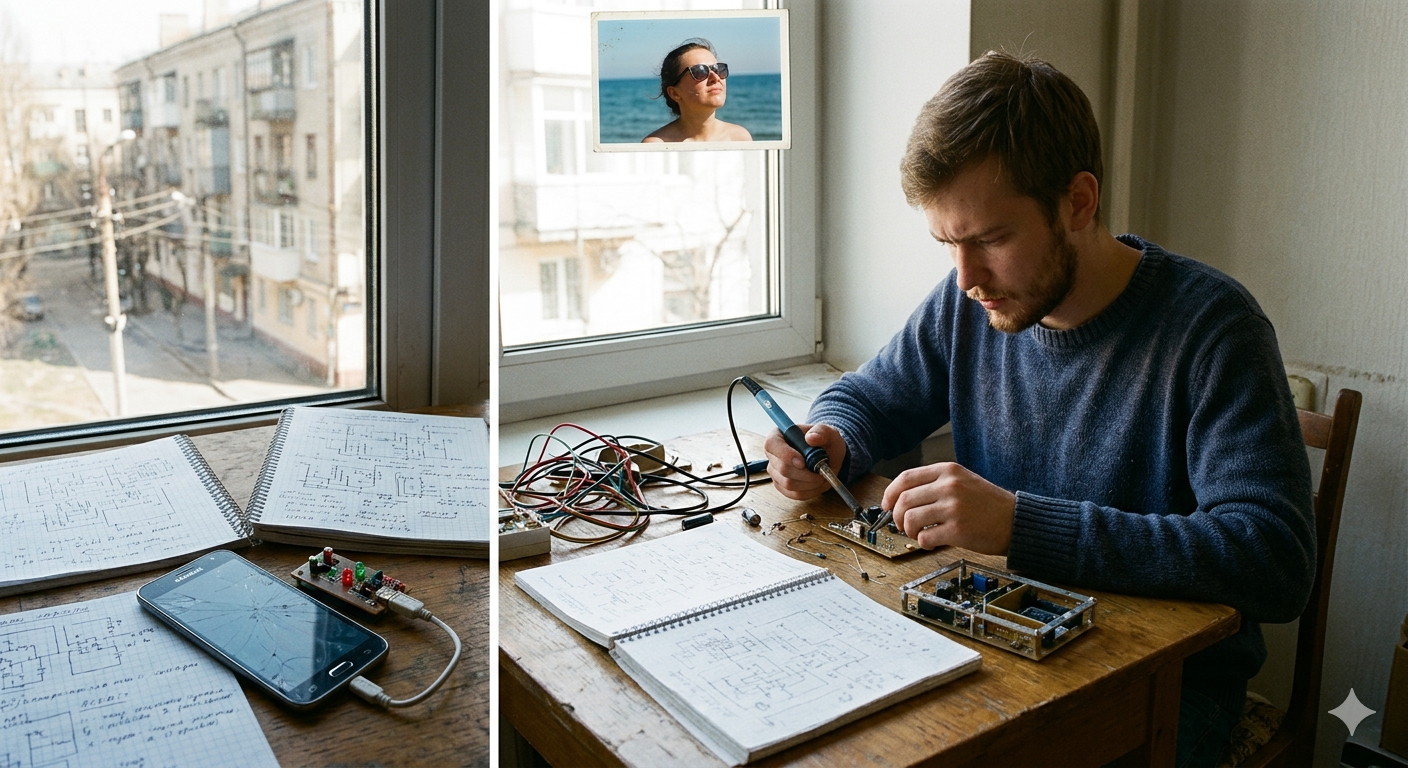
He worked at a table by the window because the light was better there and because he liked to see the street.
The phone was a Samsung. Cracked screen, bought secondhand from a man in Zaporizhzhia who needed the money more than the phone. It ran something he had found in a forum at three in the morning six weeks ago, modified by a man in Bangalore whose name he didn’t know, whose face he had never seen.
It worked. That was the only question he asked of anything now.
On the table: components, wire, a soldering iron, two notebooks filled with diagrams that were not quite like any diagrams in any manual because the manuals hadn’t been written yet for what he was building.
Marta’s photograph was taped to the wall above the window. The Aegean behind her. She was squinting into the sun and not quite smiling the way she didn’t quite smile in photographs.
He had not told her what the phone could do. He would tell her when he saw her.
He picked up the soldering iron.
Outside the street was quiet in the way streets in Kharkiv were quiet now — not empty, just listening.
The idea of the future is very clean.
The future itself will require cleaning.