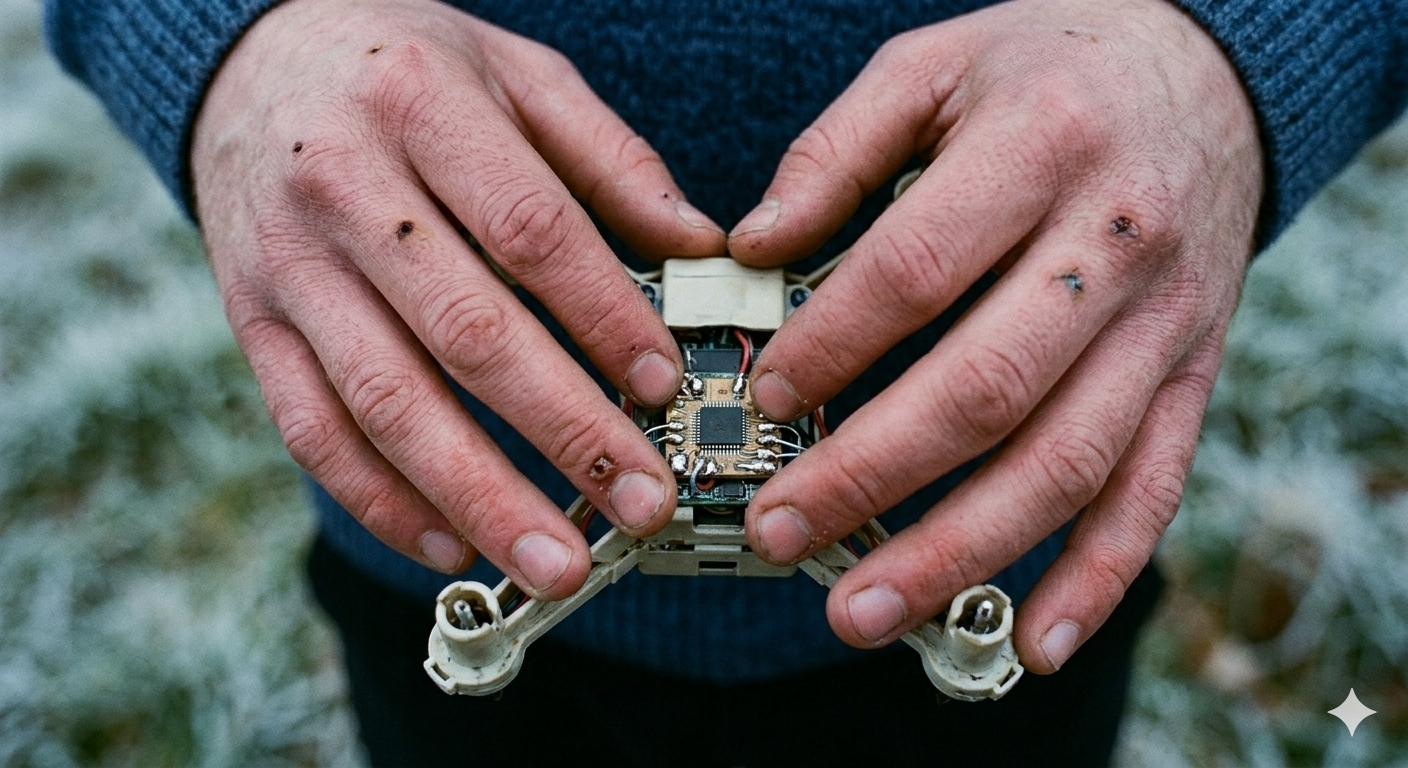
We moved the thinking onto the device.
It doesn’t need to hear from me anymore. It knows what it’s looking for. It makes the decision locally. I tell it what to find. It finds it.
The model runs on the chip. No server. No connection required. No data center. No cooling system. No power agreement with the French government. The whole loop on a piece of silicon smaller than my thumbnail, soldered by hand in a room that no longer has a window.
It sees in the dark. The thermal sensor reads engine heat from vehicle bodies, distinguishes movement from stillness, a column from a tree line, at four in the morning in fog.
It flies silent. Transmits in short encrypted bursts when it has something to say. The rest of the time it listens. You cannot jam what isn’t transmitting.
It can watch four roads simultaneously. It doesn’t get cold. It doesn’t need to sleep. It costs three hundred dollars to build from components you could order online before the war and now you improvise from whatever is available.
Forty people I have never met contributed to what it can do. We share in a Signal group. Someone figures something out in Zaporizhzhia on Monday. By Friday we have all built it into ours.
This is the fastest laboratory on earth.
It fits into our hands.